
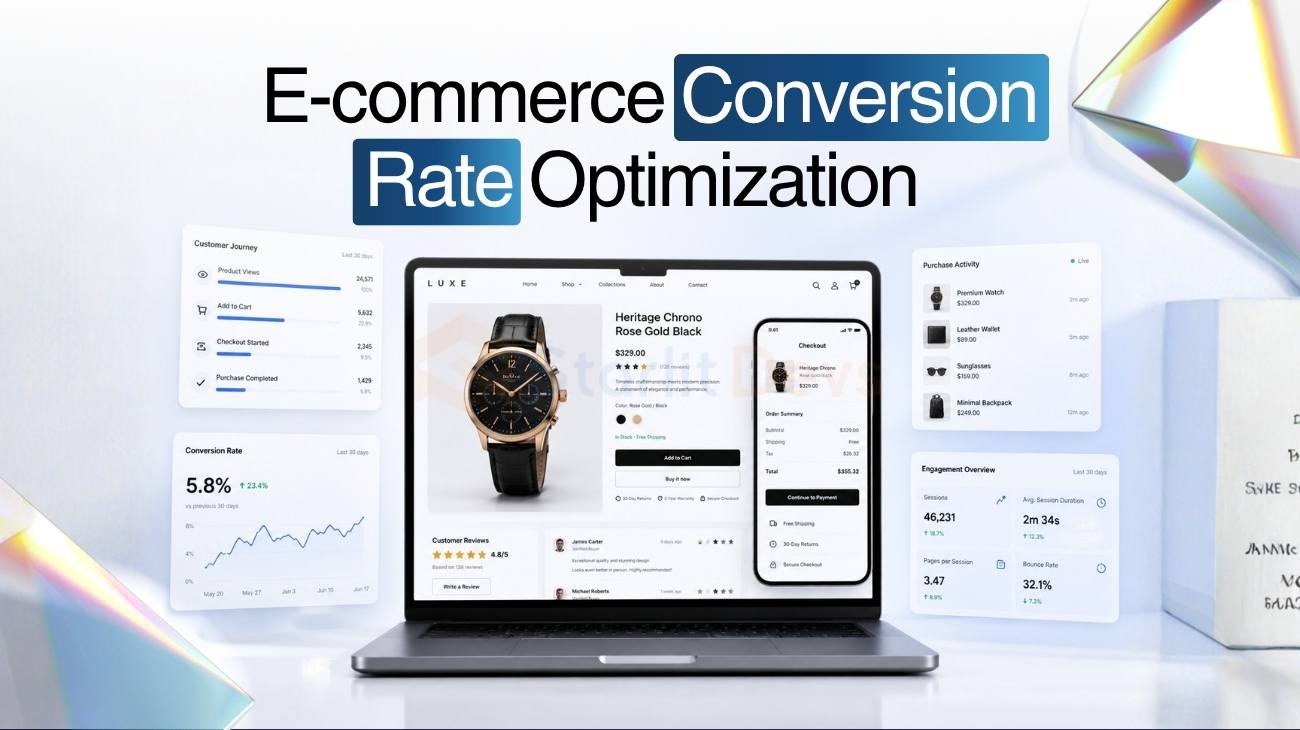
You’ve got traffic coming to your store. People are browsing, clicking around, maybe even adding things to their cart. But then — nothing. They leave. That’s the quiet frustration behind low conversion rates, and it happens to stores of every size.
The good news? Most conversion problems are fixable once you know where to look. That’s exactly what a solid ecommerce conversion rate optimization checklist is for. Instead of guessing what’s broken, you go through each part of your store in a structured way, fix what’s not working, and watch the numbers move.
This article walks you through the key areas to focus on — from your homepage all the way to checkout. Think of it as a practical ecommerce conversion rate optimization checklist you can start using today.
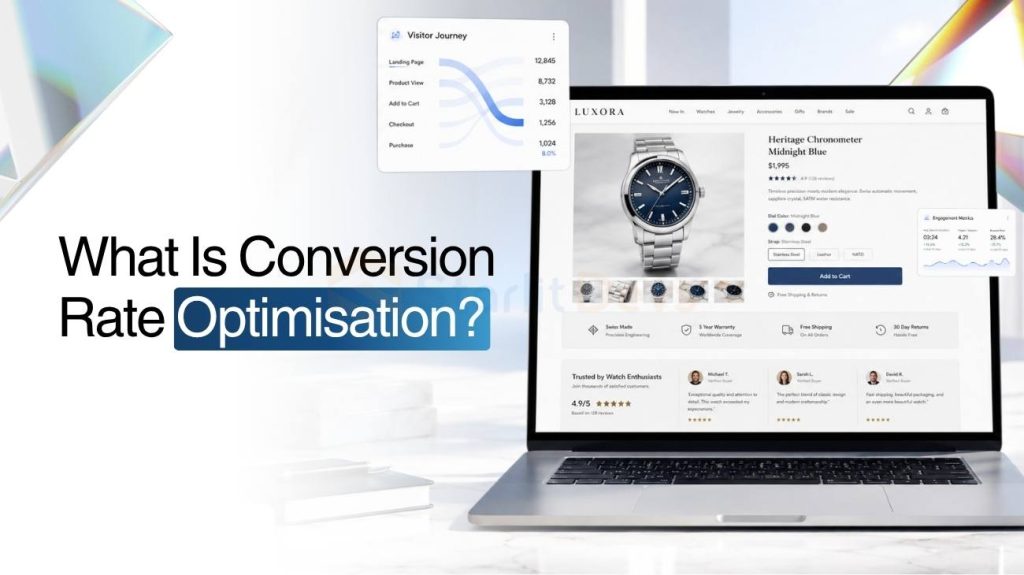
Start With the Basics: What Is Conversion Rate Optimization?
Conversion Rate Optimization (CRO) isn’t about “tricking” people into buying. It’s a data-driven process of understanding your customers’ pain points and systematically removing the friction that stops them from completing a purchase. By focusing on these incremental changes, you can significantly increase your revenue without spending an extra dime on marketing.
Conversion rate optimization (CRO) is the process of improving your store so more visitors take action — whether that’s buying a product, signing up for your newsletter, or adding something to their cart. It’s not about getting more traffic. It’s about making better use of the traffic you already have.
The average ecommerce conversion rate sits somewhere between 2% and 3%. That means for every 100 people who visit your store, roughly 97 of them leave without buying. Even a small improvement — say, getting from 2% to 3% — can mean a 50% jump in revenue without spending a single extra dollar on ads.
That’s why having a clear ecommerce conversion rate optimization checklist matters. It gives you a system, not just a Wishlist.

Homepage: Your First Impression Counts
Most visitors will judge your store within seconds of landing on the homepage. If it’s confusing, slow, or doesn’t quickly tell them what you sell and why they should care, they’re gone.
Here’s what to check on your homepage:
- Is your value proposition clear above the fold? Visitors should immediately understand what you offer and why it’s worth their time.
- Are your navigation menus simple and easy to use? Too many options cause decision fatigue.
- Do you have trust signals visible early — things like customer reviews, press mentions, or security badges?
- Is your homepage fast? Slow pages kill conversions. Aim for a load time under 3 seconds.
- Are your calls to action (CTAs) obvious? Buttons like “Shop Now” or “See Best Sellers” should stand out.
The homepage is the front door of your store. A well-optimized one doesn’t just look good — it guides visitors toward the next step.

Product Pages: Where Buying Decisions Are Made
If the homepage is your front door, product pages are where the real conversation happens. This is where shoppers decide whether to buy or bounce — and a lot of stores get this wrong.
Your ecommerce conversion rate optimization checklist for product pages should include:
- High-quality images from multiple angles. About 75% of online shoppers say product photos are a major factor in their buying decision.
- Clear, concise product descriptions that focus on benefits, not just features. Write like you’re talking to a friend, not writing a spec sheet.
- Visible pricing with no surprises. Hidden fees at checkout are one of the top reasons for cart abandonment.
- Customer reviews and ratings on the page itself. Social proof builds trust faster than anything you can write yourself.
- A prominent, easy-to-find “Add to Cart” button. If someone has to scroll to find it, you’ve already lost some of them.
- Stock or urgency indicators where they’re genuine — “Only 3 left” or “Selling fast” can nudge hesitant shoppers.
Product pages deserve the most attention in any ecommerce conversion rate optimization effort. Spend time here and you’ll see results.
The Cart and Checkout: Don't Lose Them at the Finish Line
Cart abandonment rates average around 70%. That’s not a typo — the majority of people who add something to their cart never actually complete the purchase. A lot of that drop-off happens because the checkout process is too complicated, too long, or too pushy.
Add these to your ecommerce conversion rate optimization checklist for cart and checkout:
- Offer a guest checkout option. Forcing people to create an account before buying is one of the most common conversion killers.
- Keep the checkout to as few steps as possible. Every extra step is another chance for someone to give up.
- Show a progress indicator so shoppers know how close they are to completing their order.
- Display trust badges near the payment section — SSL certificates, PayPal logos, or recognized payment icons.
- Be transparent about shipping costs early. Surprise shipping fees at the last step send people running.
- Make it easy to edit the cart without starting over.
- Offer multiple payment options — credit cards, digital wallets, and buy-now-pay-later services where relevant.
Mobile Experience: You Can't Ignore It Anymore
More than half of all e-commerce traffic now comes from mobile devices. If your store is hard to use on a phone, you’re leaving a massive chunk of potential revenue on the table. Mobile CRO isn’t optional anymore — it’s essential.
Here’s what every ecommerce conversion rate optimization checklist should include for mobile:
- Responsive design that adjusts properly to different screen sizes.
- Large, tappable buttons — nothing more frustrating than tiny links on a phone screen. Ensure all buttons are at least 48×48 pixels so they are easy to tap without accidental misfires.
- Fast mobile load times. Mobile users are even less patient than desktop users. A one-second delay in mobile load time can impact conversions by up to 20%. Compress your images and audit your third-party apps to ensure your site is blazing fast.
- Simplified mobile navigation — hamburger menus, sticky headers, and easy-to-find search.
- Sticky CTAs. On long product pages, use a “sticky” add-to-cart button that stays visible at the bottom of the screen as the user scrolls.
- A smooth mobile checkout, ideally with autofill support and digital wallet options like Apple Pay or Google Pay.
Pull up your own store on a phone right now and walk through the buying process. You’ll likely spot at least one thing that needs fixing.

Trust and Social Proof: Give People a Reason to Buy
People buy from brands they trust. Online, that trust has to be built through cues — since there’s no salesperson, no physical product to touch, and no shop they can walk into. Your job is to signal trustworthiness at every stage.
Include these in your ecommerce conversion rate optimization checklist for trust signals:
- Customer reviews — and not just the good ones. A mix of reviews actually feels more authentic.
- Clear return and refund policies. The easier your returns look, the more confident people feel buying.
- An “About Us” page that feels human. People want to know there’s a real team behind the store.
- Live chat or an easy way to contact support. Knowing help is available reduces anxiety at the buying stage.
- User-generated content (UGC) — photos from real customers using your products are worth more than any professional shoot.
Testing and Analytics: What Gets Measured Gets Improved
The most important thing about CRO is that it’s never really done. Stores that consistently improve their conversion rates don’t just fix things once and move on — they build a habit of testing and learning.
The testing section of your e-commerce conversion rate optimization checklist should cover:
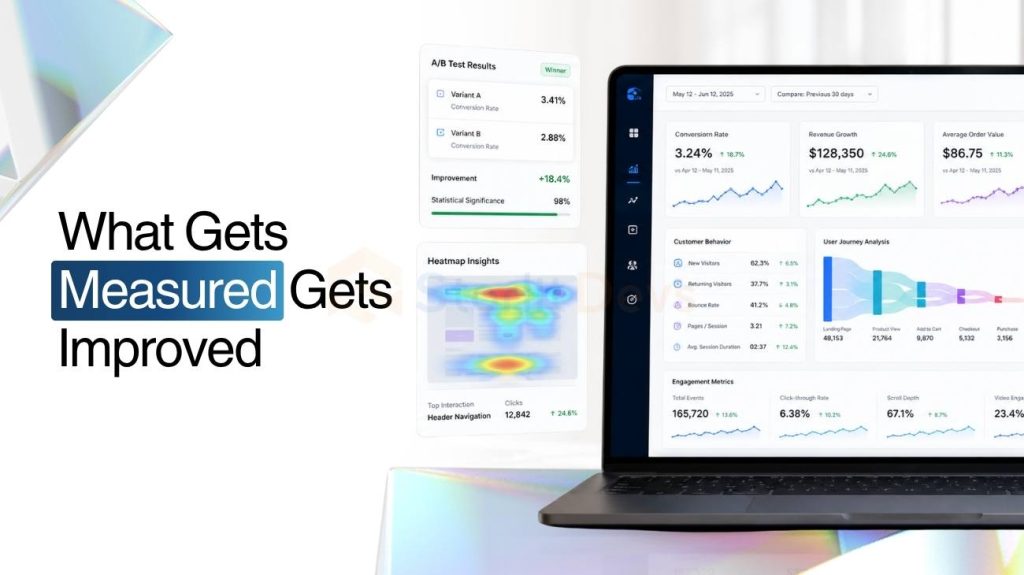
- Set up proper analytics. Google Analytics (or your platform’s built-in reports) should show you where visitors are dropping off in the funnel.
- Use heatmaps and session recordings. Tools like Hotjar or Microsoft Clarity let you actually see what visitors do on your pages.
- Run A/B tests on one thing at a time. Change your CTA button color, your headline, or your product image — but not all at once, or you won’t know what worked. Never guess what works. Test two versions of a headline, a button color, or a hero image to see which one actually drives more sales.
- Track your most important metrics such as conversion rate, average order value (AOV), cart abandonment rate, and bounce rate.
- The PIE framework. If you have too many ideas, use the PIE system to prioritize. Rate each idea from 1 to 10 based on its Potential (how much it can improve), Importance (how much traffic the page gets), and Ease (how hard it is to implement).
- Don’t Settle for “Average”. Review your data regularly and act on it. Data you don’t act on is just noise. While the industry average conversion rate is around 2-3%, your only real benchmark should be your own past performance. Focus on beating your own baseline month over month.
Putting It All Together
CRO can feel overwhelming when you look at everything at once. The trick is not to try to fix everything at the same time. Start with the areas that are causing the most drop-off in your specific store, then work your way through the rest systematically.
Using a good e-commerce conversion rate optimization checklist gives you a structure to follow. It stops you from chasing shiny tactics and keeps you focused on the fundamentals — the things that actually move conversions: clear pages, fast load times, easy checkout, real trust signals, and continuous testing.
Your store doesn’t need to be perfect to perform well. It just needs to be clear, trustworthy, and easy to buy from. Start there, run through this e-commerce conversion rate optimization checklist, and you’ll be ahead of most of your competition before you even get to advanced tactics.
The stores that win long-term aren’t the ones with the flashiest designs. They’re the ones that understand their customers, remove friction, and keep improving. That’s what ecommerce conversion rate optimization is really about.

Founding Starlit Devs has allowed us to extend our expertise globally, serving over 500 clients, including Fortune 1000 companies, with custom web development services. Our commitment to delivering exceptional design and development is coupled with a deep understanding of SEO, which has been pivotal in empowering businesses to achieve maximum online engagement and brand growth. At Starlit Devs, we take pride in our mission to provide websites that stand out in a competitive digital landscape and drive tangible results for our clients.
- Mahfuz M
