
Choosing the best payment gateways for ecommerce is a critical financial decision for any online store owner.
Your payment processor impacts costs, conversion rates, international growth, subscriptions, and cash flow. While most gateways advertise similar pricing, the real differences lie in integration, platform compatibility, and scalability.
This guide compares seven leading options in 2026 using US-based pricing and real-world use cases to help Shopify and WooCommerce store owners make a confident decision.
What Makes the Best Payment Gateways for Ecommerce?
Selecting the best payment gateways for ecommerce is not about popularity. It is about protecting margins, improving checkout conversion, and supporting long-term growth.
Payment infrastructure affects conversion rates, costs, global expansion, subscriptions, and cash flow. With cart abandonment averaging around 70 percent, checkout experience directly impacts revenue.
Here are the key factors to evaluate.
1. Transaction Fees and Cost Structure
Most US gateways charge around 2.9% + 30¢ per transaction, with extra fees for international cards and chargebacks. Stripe and PayPal follow this model, while Shopify Payments ranges from 2.4% to 2.9% depending on plan.
The real cost differences come from:
- Cross-border fees
- Currency conversion
- Refund handling
- Subscription add-ons
Even a small fee difference can significantly impact high-revenue stores.
2. Platform Integration
The best payment gateways for ecommerce integrate smoothly with your platform.
- Shopify users benefit from Shopify Payments to avoid extra transaction fees.
- WooCommerce stores typically use WooCommerce Payments or Stripe.
- Custom or headless builds often prefer Stripe or Braintree for API flexibility.
Seamless integration improves speed, mobile UX, and payment flexibility.
3. International Support
If you sell globally, check currency support, local payment methods, cross-border fees, and settlement options. Stripe supports 135+ currencies, while Shopify Payments depends on country availability.
4. Subscription Capability
Recurring billing requires automated charges, retry logic, and subscription management. Stripe and Braintree are strong in this area, while Shopify and WooCommerce rely on built-in tools or extensions.
5. Payout Speed
Typical US payouts range from 1 to 3 business days. Faster payouts improve reinvestment and cash flow.
6. Scalability
As revenue grows, you may need stronger fraud tools, reporting, and custom checkout flows. Smaller stores prioritize ease of use. Scaling brands need flexibility.
Quick Evaluation
Ask yourself:
- Which platform do you use?
- Do you sell internationally?
- Do you offer subscriptions?
- What is your average order value?
- How sensitive are your margins to fees?
Clear answers make the decision much easier.
7 Best Payment Gateways for Ecommerce Compared
If you are evaluating the best payment gateways for ecommerce, the right choice depends on your platform, revenue stage, and growth plans. Below are seven leading providers, compared using US-based pricing and real-world ecommerce use cases.

1. Stripe
Best for: Custom ecommerce stores, WooCommerce, scaling brands
Standard US Pricing:
2.9% + 30¢ per successful card charge
Why it stands out:
Stripe is one of the most developer-friendly gateways available. It supports 135+ currencies and advanced features like subscription billing, fraud detection, and API customization.
Pros
- Excellent WooCommerce integration
- Strong subscription tools
- Global currency support
- Highly customizable checkout
Cons
- Can be complex for non-technical users
- Account stability can depend on risk profile
For ecommerce brands expecting growth or international expansion, Stripe is often a long-term solution.
2. PayPal
Best for: Brand trust and quick setup
Standard US Pricing:
2.9% + 30¢ per transaction
Why it stands out:
PayPal is widely recognized and trusted. Many customers feel safer completing purchases when they see the PayPal option.
Pros
- High brand recognition
- Easy integration with Shopify and WooCommerce
- Express checkout improves conversion
Cons
- Higher dispute rates
- Limited checkout customization
For stores prioritizing buyer trust, PayPal often boosts confidence at checkout.
3. Shopify Payments
Best for: Shopify store owners
Standard US Pricing:
2.9% + 30¢ (Basic plan)
2.6% + 30¢ (Shopify plan)
2.4% + 30¢ (Advanced plan)
Why it stands out:
Shopify Payments eliminates third-party transaction fees inside Shopify. That alone can save thousands annually.
Pros
- Fully native Shopify integration
- No extra transaction fees within Shopify
- Built-in fraud analysis
Cons
- Only available in supported countries
- Limited outside the Shopify ecosystem
For Shopify-based brands, this is often the most cost-efficient option.
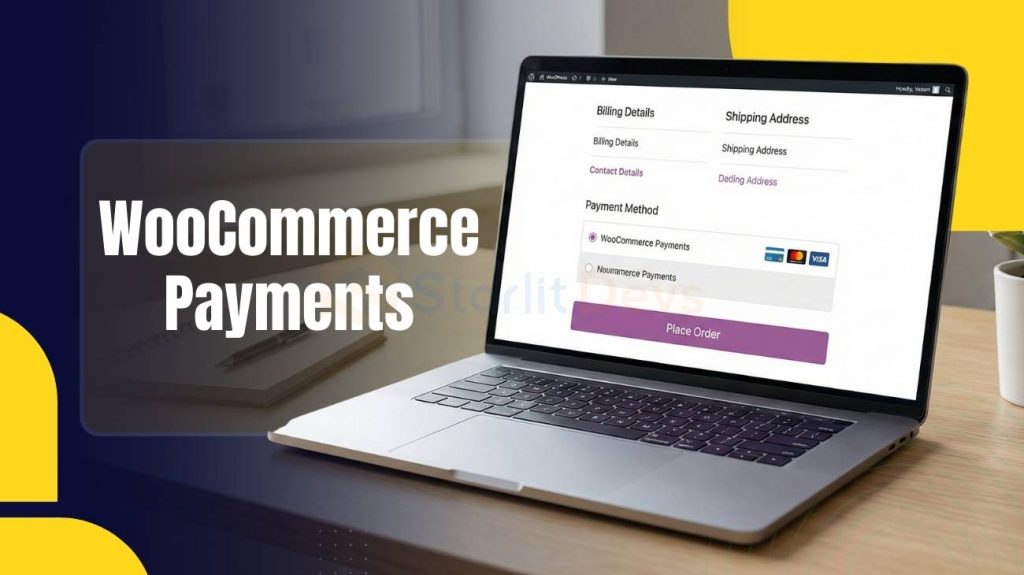
4. WooCommerce Payments
Best for: WordPress ecommerce stores
Standard US Pricing:
2.9% + 30¢ per transaction
Why it stands out:
WooCommerce Payments is powered by Stripe infrastructure but integrated directly into the WooCommerce dashboard.
Pros
- Native WordPress integration
- Centralized dashboard management
- Strong compatibility with plugins
Cons
- Less flexible than direct Stripe integration
- Availability varies by country
For WooCommerce merchants who prefer simplicity over advanced customization, this is a strong option.

5. Square
Best for: Omnichannel businesses
Standard US Pricing:
2.9% + 30¢ for online transactions
Why it stands out:
Square integrates POS and online payments smoothly, making it ideal for brands selling both offline and online.
Pros
- Strong POS integration
- Easy setup
- Transparent flat pricing
Cons
- Limited advanced customization
- Less global coverage than Stripe
If you operate both retail and ecommerce, Square simplifies operations.

6. Authorize.Net
Best for: Established and enterprise stores
Standard US Pricing:
2.9% + 30¢ + $25 monthly gateway fee
Why it stands out:
Authorize.Net has been in the industry for decades and offers strong fraud tools and reliability.
Pros
- Advanced fraud detection
- Recurring billing support
- Trusted enterprise-level provider
Cons
- Monthly gateway fee
- More complex onboarding
For high-volume stores needing stability and control, Authorize.Net remains relevant.

7. Braintree
Best for: High-growth and subscription ecommerce
Standard US Pricing:
2.9% + 30¢
Why it stands out:
Owned by PayPal, Braintree offers advanced subscription management and global payment methods.
Pros
- Strong recurring billing tools
- Multiple global payment options
- Developer-friendly
Cons
- More technical setup
- Not as beginner-friendly
For SaaS-style ecommerce or subscription-first brands, Braintree is often preferred.

Comparison Table - Best Payment Gateways for Ecommerce
When narrowing down the best payment gateways for ecommerce, a quick side-by-side view helps eliminate options fast. Below is a lightweight comparison focused on US pricing, platform compatibility, and international capability.
| Gateway | Standard US Fee | Best For | WooCommerce | Shopify | International Support |
|---|---|---|---|---|---|
Stripe |
2.9% + 30¢ |
Custom & scaling brands |
Excellent |
Strong |
135+ currencies |
PayPal |
2.9% + 30¢ |
Trust & quick setup |
Excellent |
Excellent |
Strong global presence |
Shopify Payments |
2.4–2.9% + 30¢ |
Shopify stores |
No |
Native |
Supported countries only |
WooCommerce Payments |
2.9% + 30¢ |
WordPress stores |
Native |
No |
Limited availability |
Square |
2.9% + 30¢ |
Omnichannel sellers |
Good |
Good |
Moderate |
Authorize.Net |
2.9% + 30¢ + $25/mo |
Enterprise |
Good |
Good |
Moderate |
Braintree |
2.9% + 30¢ |
Subscription brands |
Strong |
Strong |
Strong |
Quick Observations
● Most gateways share similar base pricing. The real cost difference often appears in cross-border fees and chargebacks.
● Shopify Payments is the most cost-efficient option inside Shopify because it avoids additional third-party transaction fees.
● Stripe offers the strongest international and developer flexibility.
● WooCommerce Payments simplifies management for WordPress users but offers less customization than direct Stripe integration.
● Authorize.Net introduces a monthly fee, which makes it better suited for higher-volume stores.
If you are running a WooCommerce or Shopify store, your platform alone may already narrow your options.
How to Choose the Best Payment Gateway for Your Ecommerce Business
Selecting the best payment gateways for ecommerce becomes easier when you evaluate your business stage, margins, and growth model instead of focusing only on brand popularity.
Here is a practical decision framework ecommerce owners can use.
1. Choose Based on Your Platform First
Your ecommerce platform often eliminates half your options immediately.
If you use Shopify
- Shopify Payments is typically the most cost-efficient.
- You avoid third-party transaction fees.
- Native checkout improves performance and tracking.
If you use WooCommerce
- WooCommerce Payments offers simplicity.
- Stripe offers more customization and scalability.
- Both integrate seamlessly into WordPress.
Platform alignment reduces technical friction and long-term operational headaches.
2. Consider Your Revenue Stage
Your revenue size impacts which gateway makes sense.
Under $250K per year
- Prioritize ease of setup.
- Stripe, PayPal, Shopify Payments, or WooCommerce Payments are usually sufficient.
- Avoid complex enterprise tools.
$250K to $2M per year
- Start evaluating fee efficiency more carefully.
- Compare dispute management.
- Look at subscription capabilities if applicable.
$2M+ per year
- Small fee differences matter.
- Negotiate rates if possible.
- Consider advanced fraud tools.
- Enterprise gateways like Authorize.Net may become relevant.
As revenue grows, margin optimization becomes more important.
3. Analyze Your Average Order Value
Transaction fees hit differently depending on AOV.
- Low-ticket stores feel percentage-based fees more heavily.
- High-ticket stores may prioritize fraud protection and chargeback tools.
- Subscription businesses must evaluate recurring billing reliability.
If your AOV is under $30, even minor fee differences can impact profitability significantly.
4. Decide If You Sell Internationally
If your store plans to scale globally, international support becomes critical.
Ask:
- Does the gateway support local currencies?
- What are cross-border fees?
- Can you settle in your home currency?
- Are local payment methods supported?
Stripe and Braintree generally offer broader international flexibility. Shopify Payments depends on country availability.
For US-only brands, this may not be urgent today. For global brands, it is foundational.
5. Evaluate Subscription and Recurring Needs
If your ecommerce model includes:
- Memberships
- SaaS-style billing
- Subscription boxes
You need advanced recurring logic.
Stripe and Braintree are strong here. Shopify supports subscriptions through apps or built-in tools. WooCommerce relies on extensions.
Choosing incorrectly at this stage can create future migration complexity.
6. Balance Simplicity vs Control
The best payment gateways for ecommerce fall into two broad categories:
Simplicity-focused
- Shopify Payments
- WooCommerce Payments
- Square
Control and flexibility-focused
- Stripe
- Braintree
- Net
If you do not have technical resources, simplicity wins. If you plan to scale aggressively or build custom checkout experiences, flexibility becomes more valuable.
Final Verdict - Which Payment Gateway Is Best for You?
Best for Shopify Stores
Shopify Payments is usually the smartest choice.
- No third-party transaction fees
- Native checkout
- Built-in fraud tools
- Lower rates on higher plans
You can still add PayPal or Stripe if needed.
Best for WooCommerce Stores
- WooCommerce Payments for simplicity
- Stripe for flexibility and scaling
Choose Stripe if you plan international growth or subscriptions.
Best for Subscription-Based Ecommerce
- Stripe
- Braintree
Both offer advanced recurring billing and global flexibility.
Best for Omnichannel Businesses
- Square
Strong POS and online integration in one ecosystem.
Best for Enterprise Stores
- Net
- Stripe (negotiated rates)
At scale, fee negotiation and fraud tools matter most.
The Real Answer
The best payment gateways for ecommerce are defined by alignment, not popularity.
Choose based on:
- Platform
- Revenue size
- International plans
- Subscription needs
- Technical resources
Most small to mid-size stores perform well with Stripe, Shopify Payments, or WooCommerce Payments. As your store grows, your payment strategy should evolve with it.

FAQs (Frequently Asked Questions)
Is Stripe or PayPal better for a small ecommerce store?
It depends on your setup. Stripe offers more customization and better subscription tools. PayPal adds strong brand trust and can improve checkout confidence. Many small stores use Stripe as primary and PayPal as a secondary option.
Why does Shopify charge extra if I don’t use Shopify Payments?
Shopify applies an additional transaction fee when you use third-party gateways like Stripe or PayPal. Using Shopify Payments removes that extra fee, which is why it’s often the most cost-efficient option for Shopify stores.
What’s the best payment gateway for WooCommerce in 2026?
Most WooCommerce users choose either WooCommerce Payments for simplicity or Stripe for flexibility. If you plan to scale internationally or run subscriptions, Stripe usually offers more long-term control.
Can I use both Stripe and PayPal on the same ecommerce store?
Yes. Many ecommerce owners enable both. This gives customers more payment choices and can increase overall conversion rates.
Which payment gateway has the lowest fees overall?
Most of the best payment gateways for ecommerce start at 2.9% + 30¢ in the US. The real difference comes from cross-border fees, chargeback costs, and platform transaction fees. High-volume stores can often negotiate lower rates.
What payment gateway works best for international ecommerce?
Stripe and Braintree typically offer broader currency support and international payment methods. Shopify Payments works well but is limited to supported countries.

Founding Starlit Devs has allowed us to extend our expertise globally, serving over 500 clients, including Fortune 1000 companies, with custom web development services. Our commitment to delivering exceptional design and development is coupled with a deep understanding of SEO, which has been pivotal in empowering businesses to achieve maximum online engagement and brand growth. At Starlit Devs, we take pride in our mission to provide websites that stand out in a competitive digital landscape and drive tangible results for our clients.
