

eCommerce Product Listing Services - Optimized Listings That Sell
End-to-end ecommerce product listing services for online stores and marketplaces. SEO-ready titles, guideline-compliant images, clean bulk uploads, and full catalog management — for Amazon, eBay, Walmart, Etsy, Shopify, and WooCommerce.
Turn Browsers Into Buyers With High-Converting Product Pages
Traffic isn't your problem. Conversion is.
Most stores we take on already get visitors, from ads, from search, from the marketplace's own algorithm doing its job. The listing is where that traffic either turns into revenue or quietly bounces to a competitor's product two rows down.
A listing that doesn't answer will this fit, is this real, or " How fast does it ship loses the sale to whoever answers first.
We fix the three things that quietly kill conversion:
- Weak titles - buried keywords, no clear match to how people search
- Spec-sheet copy - features listed, benefits never stated
- Off-spec images - rejected on upload, or approved and still ignored by shoppers
None of these show up in a traffic report. They show up in the conversion rate, three months after nobody looked at the listing again — which is exactly the gap our ecommerce product listing services are built to close.
What's Included in Our Product Listing Service
Our ecommerce product listing services cover the full pipeline, not just one part of it — from research through ongoing optimization.
| Service | What it solve |
|---|---|
Product research & category mapping |
Wrong category = invisible product |
SEO titles, descriptions & bullets |
Weak copy = no ranking, no clicks |
Image optimization & media prep |
Off-spec images = rejected uploads |
Variation & attribute setup |
Broken variants = split reviews, lost filters |
Bulk upload & catalog cleanup |
Manual entry = errors at scale |
Marketplace listing & compliance |
Policy misses = suppressed listings |
Shopify/WooCommerce upload |
Messy store structure = poor navigation |
Pricing, inventory & SKU support |
Sync gaps = overselling |
Pre-publish QA audit |
Live errors = lost sales, lost trust |
Ongoing optimization |
Static listings = slow decline |
SEO-Optimized Titles, ions & Bullet Points
A title has one job: get the product to show up when someone searches for it, in a form that’s still readable once it does. That’s a narrower target than it sounds, and it changes by platform — it’s also where most ecommerce product listing services stop short, treating every marketplace like it runs the same rulebook.
- Titles built from real search-term data, primary keyword placed first
- Bullet points that lead with benefit, back it up with spec
- Plain, direct descriptions — no filler paragraphs padded for word count
- Backend search terms and metadata completed in full
Image Optimization & Listing Media Support
- Background removal, resizing, and cropping to exact platform specs
- Lifestyle and infographic-style images where the platform allows them
- Shot-list guidance if you're capturing new photography
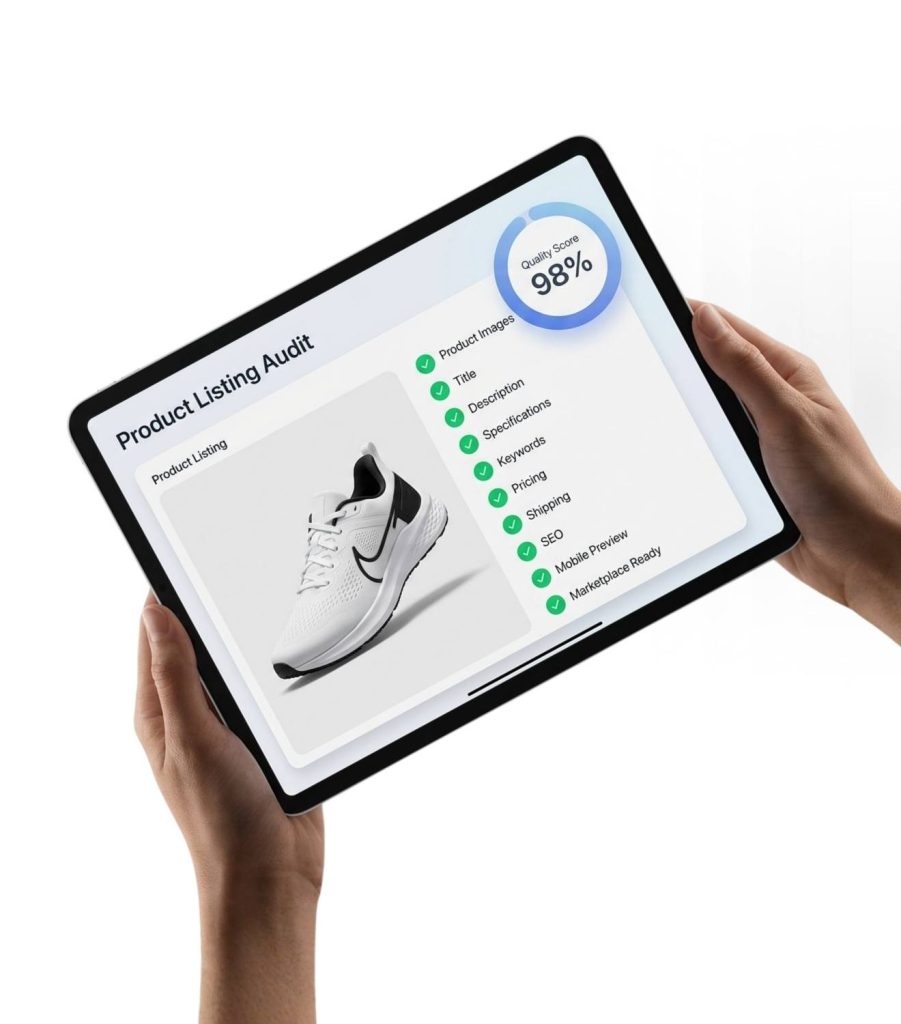
Amazon rejects anything under 1000px with a non-white main background. Etsy buyers expect lifestyle context that shows scale and texture, since browsing for handmade or vintage detail is half the platform’s appeal. Get the spec wrong, and the image either bounces at upload or quietly underperforms once it’s live.
Variation Setup (Size/Color) + Attributes That Improve Ranking
- Proper parent-child mapping so variants don't split into competing listings
- Consistent attribute naming across the full catalog, so "Navy" and "Navy Blue" don't fragment inventory
- Complete attribute fields for size, color, and material so the filter search actually works
Bulk Product Upload, CSV/Feed Management & Catalog Cleanup
Marketplace Listing (Amazon/eBay/Walmart/Etsy) + Policy Compliance
Compliant from the start, not fixed after a suppression email.
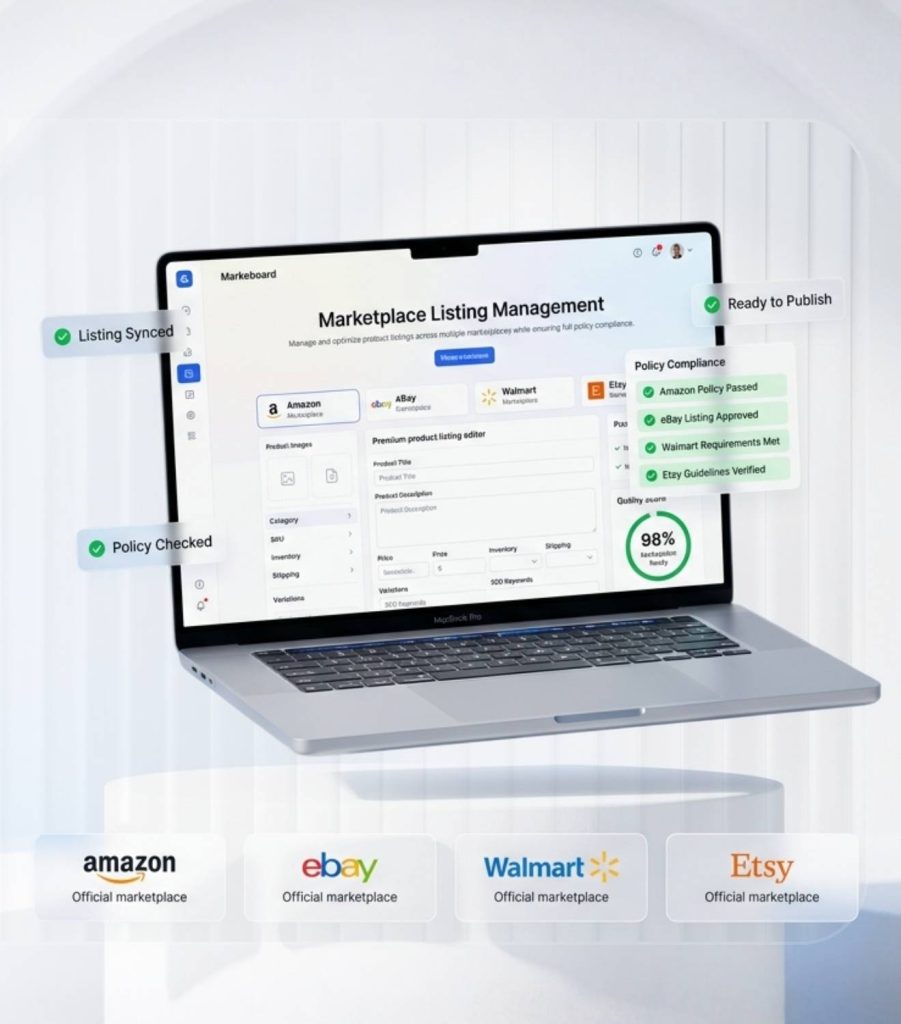
Amazon
eBay
Walmart
Etsy
If a listing gets suppressed anyway, we diagnose the cause, fix the underlying issue, and resubmit. Most listings we take on are reinstated within 48 hours.
Shopify/WooCommerce Product Upload +Store Organization
Your store, structured to scale — not just filled with products.
Your own store runs by different rules than a marketplace. Nobody enforces a title-length limit, but that also means nobody stops you from building a catalog that’s technically live and practically unusable — overlapping collections, tags that don’t match how customers filter, product pages that load slowly because nobody compressed the images.
Shopify
Smart Collections, clean variant setup, navigation built around how customers actually shop
WooCommerce
Pricing, Inventory & SKU Management Support
- Ongoing pricing updates across platforms
- Consistent SKU structure so one product doesn't fragment into multiple IDs
- Inventory sync support so a sale on one channel reflects everywhere else
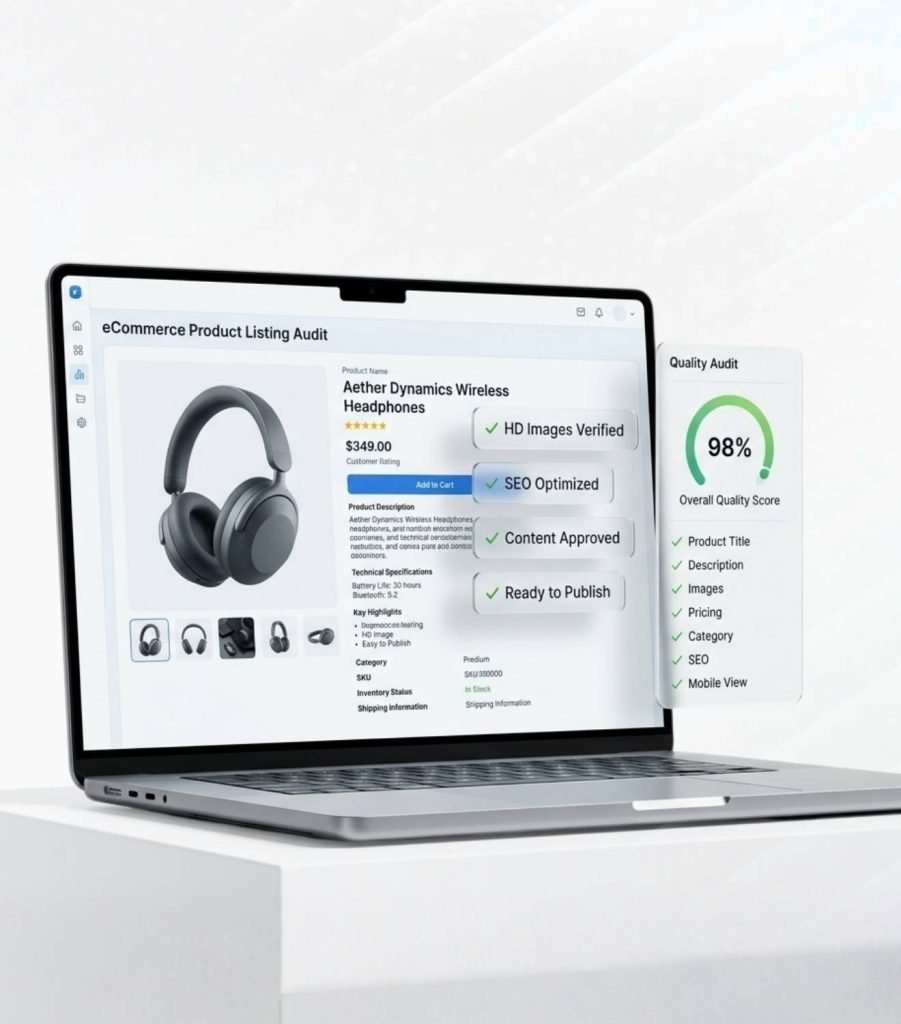
Quality Check & Listing Audit Before Publishing
- Title length and keyword placement
- Image spec compliance
- Category and attribute accuracy
- Pricing accuracy
- Typos and formatting
Ongoing Optimization: A/B Testing, SEO Improvements & Updates
A listing that converts well in March can flatten by August. Search terms shift, competitors update their own copy, and seasonal demand changes what shoppers are actually typing. None of that shows up until a quarterly report shows the dip.
- Title and image A/B testing where platforms support it
- Periodic keyword refreshes as search trends shift
- Seasonal copy updates
- Monthly performance reviews
What Sellers Say About Working With Us
Businesses trust our fulfillment services for fast, accurate, and reliable order handling. Every shipment is managed with care to ensure consistent results.

Operations Lead

apparel category

Etsy handmade goods

DTC electronics brand
Frequently Asked questions
How long does it take to list a product?
Do you handle all marketplaces or just one?
What if my listings are already live somewhere else?
Do you write the copy or just format it?
Is there a minimum catalog size?
What's the difference between the audit and the full service?
Get a Free Listing Audit - Start Now
Send your storefront link or your top 10 listings. We'll send back what's costing you visibility, what's costing you conversions, and what to fix first. No pitch, no obligation — just a straight look at whether our ecommerce product listing services are the right fit for your catalog.
